

Many people ask how profitable are escape rooms before deciding to start one. The good news is, they can be a strong source of income when planned well. Escape rooms earn money by offering fun, hands-on games that friends, families, and teams enjoy. With low staff needs and high demand, they work well in cities, malls, and tourist spots. Blue Apple Launchpad supports new owners by helping them build smart, low-cost operations that people love to visit.
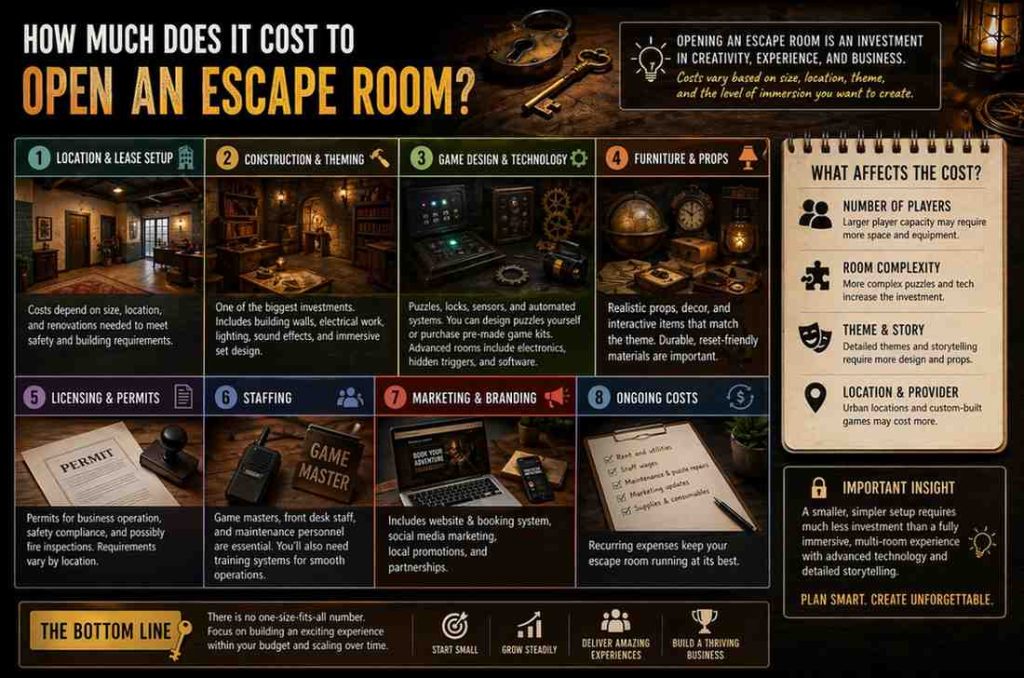
Startup Costs of Opening an Escape Room
Before you start building a profitable escape room business, it’s important to understand your startup costs. These costs can vary, but they usually fall between $7,000 and $50,000 or more, depending on your setup.
Some people choose to build everything themselves, while others buy ready-made escape rooms. Each choice affects your time, cost, and profits.
Basic Startup Expenses
Here are some common costs to expect:
- Building and decoration: $3,000 to $20,000
(Walls, paint, furniture, and room setup) - Puzzles and props: $5,000 to $15,000
(Locks, clues, interactive items) - Technology and sound: $2,000 to $5,000
(Lights, speakers, cameras, control systems) - Rent and setup: Varies by location
(Includes deposit, lease, and room changes) - Licenses and permits: $1,000 to $3,000
(Business license, insurance, local rules) - Marketing and website: $1,000 to $4,000
(Website, ads, flyers, branding)
Many owners now pick modular or pre-built rooms. These reduce mistakes, save time, and help you open faster. That’s key if you’re focused on how profitable are escape rooms and want faster returns.
Tip: Don’t Forget Hidden Costs
- Game resets and repairs
- Monthly internet and utility bills
- Payment processing fees
- Staff hiring or training costs
Even small things can add up, so plan ahead to avoid surprises.
How Much Can an Escape Room Make Monthly?
If you’re starting an escape room, it helps to know how much it could earn each month. Escape rooms can bring in a steady and strong income when run well.
On average, escape rooms make between $15,000 and $50,000 per month. Some high-traffic locations make even more, especially in popular cities or tourist areas.
The amount you earn depends on things like:
- Your ticket price
- How many people play each game
- How many games you run per day
- Your location and marketing
- How well your room is managed
All of these factors affect how profitable are escape rooms for different owners.
Example Monthly Earnings Breakdown
Here’s a simple breakdown of how earnings can add up:
Metric | Estimated Range |
Average ticket price | $25 – $40 per player |
Players per game | 2 – 6 |
Games per day | 6 – 10 |
Revenue per day | $500 – $1,200 |
Estimated monthly revenue | $15,000 – $50,000 |
Net profit margin | 40% – 60% |
High-Income Potential in Busy Areas
Escape rooms in busy malls, city centers, or near tourist spots often do better. Many of them make over $50,000 per month because they get more players each day.
With low staff needs and repeat bookings, these rooms can quickly turn into a reliable business. This is why many people see escape rooms as one of the best small businesses for fun and profit.
Ongoing Expenses to Maintain an Escape Room
Once your escape room opens, you’ll need to budget for monthly costs. These regular expenses help you keep the business running smoothly and safely.
Even if you start strong, managing ongoing costs is part of how profitable escape rooms are over time. Staying on top of your bills helps protect your earnings.
Common Monthly Costs
Here are the usual monthly expenses to expect:
- Rent or lease: $1,000 to $6,000
(Cost depends on your location and space size) - Staff salaries: $2,000 to $7,000
(Covers game masters and managers) - Utilities: $200 to $500
(Electricity, water, internet, and phone) - Repairs and parts: $100 to $1,000
(Fixing broken props, puzzles, or equipment) - Marketing: $300 to $1,000
(Ongoing ads, social media, and SEO) - Insurance and permits: $100 to $300
(Protects your business and meets legal rules) - Software updates: $50 to $200
(Booking tools, timer systems, and online forms)
Cut Costs With Smart Setup
Using automated or self-resetting games can save you money. These systems reduce how many workers you need to reset the room between games.
Over time, these smart tools make your business easier to run and help keep more money in your pocket.
Don’t Forget the Essentials
Keep an updated escape room equipment list so you know what you have and what might need fixing or replacing. This helps you avoid sudden costs or surprises.
Also, plan ahead for:
- Emergency repairs
- Seasonal marketing pushes
- New room builds or game updates
Good planning helps you manage costs and protect your profits every month.
How to Design and Build an Escape Room?
Building an escape room takes both creativity and smart planning. If done right, the experience keeps guests coming back, which helps determine how profitable are escape rooms over time.
Here’s a clear breakdown of what you need to build a fun and reliable escape room.
Key Elements to Include
Use the table below to understand the core items needed for a smooth setup:
Category | What to Include | Why It Matters |
Puzzles and Gadgets | RFID sensors, buttons, magnets, light and sound triggers | Makes the game interactive and fun |
Props and Decorations | Durable props, theme lighting, sound effects, costumes | Brings the story to life and improves the mood |
Control Software | Game timer, camera feeds, reset tools, hint button controls | Helps manage games faster and reduces wait time |
Setup Equipment | Wires, speakers, lights, mounts, and power supplies | Keeps everything connected and safe |
Escape Room Equipment List | Puzzle parts, Sensors, Sound system, Lights, Software, Props | Track everything you need from start to finish |
Make It Easy for Players
Players enjoy puzzles that react when they do something right. You can add:
- Motion sensors that unlock a box when someone steps on a tile
- Touch panels that light up when pressed in the correct order
- Sound-based triggers that respond to claps or voices
These upgrades cost more upfront, but they make the game better and help boost word-of-mouth marketing.
Automate When You Can
Self-resetting puzzles help your team reset rooms faster. This means you can run more games in one day without adding more staff. It also saves time and reduces mistakes.
Use Software to Stay Organized
Game control software helps your staff:
- Start and stop the game timer
- Track how players are doing
- Send hints when needed
- Reset puzzles with one click
Less manual work means smoother games and happier players.
Choose Strong Props That Last
Cheap props break fast and cost you more in repairs. Use:
- Hard plastic or wood props
- Costumes with simple designs
- Lights and sounds made for daily use
- Materials that can handle wear and tear
A strong setup saves money over time and helps create a better player experience.
Install Everything the Right Way
Use clear wiring, good sound, and stable power for your equipment. Keep a printed setup guide to help your team fix problems quickly.
Working with trusted suppliers lets you set up your room in 4 to 7 days, depending on your team size.
Tips to Increase Escape Room Profitability
Boosting profits in your escape room doesn’t need to be complicated. With the right steps, even small locations can earn more and grow fast. Here are some easy ways to improve results while giving players a better experience.
Choose Popular Themes
Escape rooms with strong themes attract more players. Horror, mystery, fantasy, and adventure are always in demand. These themes work well for families, tourists, and groups.
You can also use well-known stories like haunted houses or ancient temples. Changing your room themes during holidays makes people want to come back. This adds more bookings each year.
Use Smart Puzzles and Automation
Smart puzzles do more than entertain. They help you save money. Games that reset on their own allow you to run more bookings daily with fewer workers.
Automation keeps your games flowing smoothly, especially on weekends or busy days. It also helps reduce errors, which means happier players and better reviews.
Make Booking Fast and Easy
Add features like real-time availability, text reminders, and mobile payment to your booking system. People want to book quickly without any stress.
During booking or check-in, offer extras like early access, private photos, or bundle deals with other attractions. These small upgrades can boost each sale.
Market to Groups and Events
Big groups like schools, companies, and parties often book on weekdays. These events fill your slow times and bring in more money per person.
Offer team packages that include snacks, drinks, or branded items. Reach out directly to office managers and party planners in your area. This can lead to repeat bookings year-round.
Sell Branded Items
Add income by selling items like shirts, mugs, or puzzles based on your room’s story. People love to take home memories after a fun experience.
These items also help spread your brand. Players often post their gear online, giving you free marketing when shared on social media.
Use Strong Customer Service
Train your team to greet guests warmly and explain things clearly. A friendly smile and helpful tips go a long way.
After the game, ask players to leave a review on sites like Google or TripAdvisor. You can thank them with a small gift or photo token.
Track Your Business Numbers
Watch things like how many people finish the game, how often hints are used, or how many bookings turn into sales. These numbers tell you where to improve.
If one game gets fewer reviews, you may need to update it. If bookings drop, you can adjust your ads or offers.
Keep Games Fresh
Update your games during holidays like Halloween or Christmas. You can also run special events or limited-time rooms to keep guests coming back.
Repeat players are the key to long-term success. Changing things often keeps your room exciting and new.
Promote with Facebook Ads
Running Facebook Ads helps you reach more players near your area. Use simple images and short texts to show your rooms, deals, and events.
Ads can target people who like games, birthdays, or team-building. This brings in more traffic and builds steady growth over time.
Ready to Launch a Profitable Escape Room?
Curious about how profitable are escape rooms? Turn your passion into a real business with expert help from Blue Apple Launchpad. We’ll guide you through every step from planning to growing your earnings. Contact us today and get the support you need to build smarter and earn faster.
FAQs
1. Are escape rooms profitable for small business owners?
Yes, escape rooms can be profitable when planned well. Many owners earn steady income with low staff needs and repeat customers.
2. How long does it take to make money from an escape room?
Most escape rooms reach break-even within 6 to 18 months. This depends on location, costs, and how well the room is marketed.
3. Do escape rooms work better in cities or small towns?
Escape rooms do well in both places. Cities offer more traffic, while small towns often have lower rent and loyal local customers.
4. How many staff members does an escape room need?
Many escape rooms run with one or two staff per shift. Automated games can reduce staff needs even more.
5. Is marketing important for escape room success?
Yes, marketing is very important. Online ads, reviews, and social media help bring in new players and repeat visits.
Related Posts

Influencer Marketing Guide To Boost Your Earnings

Email Marketing Guide to Make More Money
Escape Room Design Guide To Maximize Engagement & Profits
Improve Conversion Rates with Our PPC guide
Operations Guide To Streamline & Scale Your Business

Google Ads Guide to improve your performance

Facebook Ads Guide to Level up Your Performance
The Conversion Rate Optimization (CRO) Guide That’ll Make You More Money

Show Up In Search Results With This Always-Updated SEO Guide
Build And Improve Your Landing Pages With This Always Updated Chapter Guide
Trampoline Park
Trampoline Park Investment Guide to Grow Revenue And Profits