

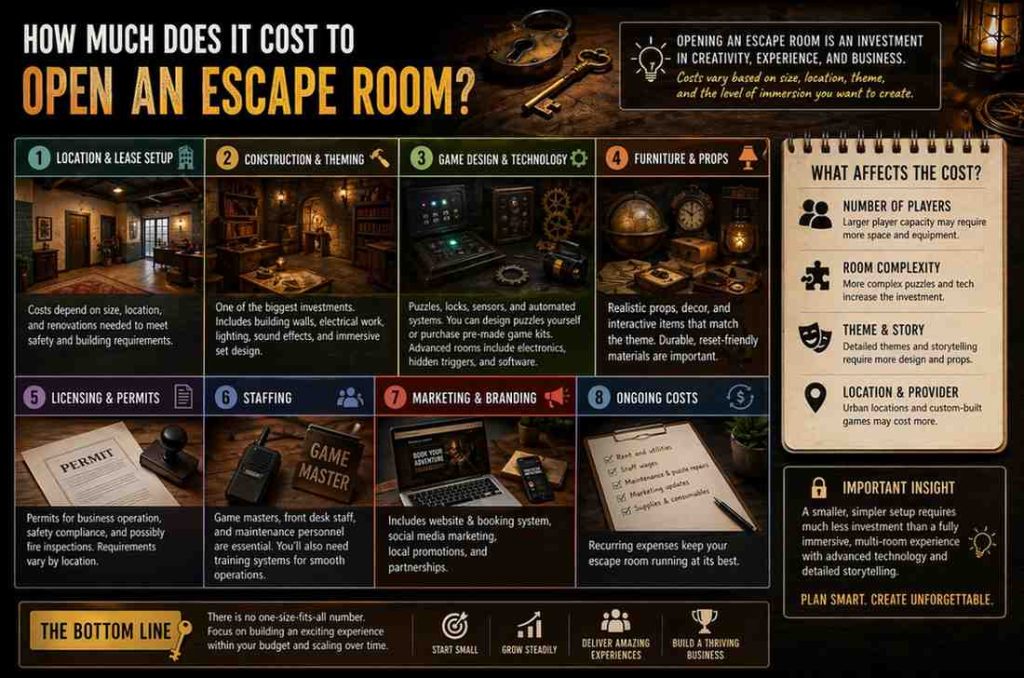
Many new owners ask how much does it cost to start an escape room before choosing a location or theme. Costs change based on room size, design, and build style. A small DIY setup costs less but takes more time. A professional build costs more but opens faster. Planning early helps avoid surprise expenses. Clear budgeting makes the escape room business easier to manage and grow with confidence long term.
How Much Does It Cost to Start an Escape Room on Average
Starting an escape room can cost more or less based on size, tools, and build style. Many owners ask how much does it cost to start an escape room before setting a budget. The average cost falls into three clear levels.
- Low budget setup: Costs usually range from $7,000 to $60,000. This includes one simple room, DIY props, and basic locks. Owners often build most parts themselves.
- Mid range setup: Costs often fall between $100,000 and $200,000. This covers two or three rooms, better themes, and some technology. Many businesses choose this level.
- High budget setup: Costs can reach $200,000 to $400,000 or more. This includes several rooms, custom designs, and advanced tech. These venues feel more polished and immersive.
Escape Room Startup Cost Ranges Explained
Understanding startup cost ranges helps owners plan with less stress. Many people compare budgets before they decide how much does it cost to start an escape room. These ranges are easy to understand and based on common setups.
Budget Escape Room Costs
A budget escape room usually costs $7,000 to $60,000. This option works well for DIY builders. Owners often create one or two rooms. Puzzles stay simple and easy to reset. Spaces are smaller, which helps lower rent. As a result, startup costs stay more manageable.
Mid Range Escape Room Costs
Mid range escape rooms often cost $100,000 to $200,000. Most venues build two or three rooms. Props and technology stay balanced for better play. Rent costs remain moderate in many locations. Because of this, many owners choose this level for steady growth.
High End Escape Room Costs
High end escape rooms can cost $200,000 to $400,000 or more. These venues offer three or four rooms. Custom builds and advanced tech are common. Rent and staff costs also increase. Even so, players enjoy deeper stories and stronger immersion.
Major Costs When Starting an Escape Room
Starting an escape room includes several main cost areas. Each cost plays a role in how much does it cost to start an escape room. When you break them down, the numbers feel easier to understand.
Construction and Room Build Costs
Building the rooms sets the foundation for the game. Costs change based on materials and room size.
- Walls, sets, paint: These shape the room and theme. Basic materials cost less but still look great when done well.
- Soundproofing basics: This helps keep noise inside each room. Simple insulation usually works for small spaces.
- Fire code compliance: Local rules may require exits and signs. These safety steps add to the total cost.
Puzzle and Prop Costs
Puzzles drive the player experience. Costs depend on design and build choices.
- DIY vs custom props: DIY props save money but take time. Custom props cost more but look polished.
- Reset time considerations: Simple puzzles reset faster. Faster resets help games run smoothly.
Technology Costs in an Escape Room
Technology supports puzzles and game flow. Costs grow with complexity.
- Maglocks: These control doors during gameplay. Basic locks cost less and work well.
- Control systems: These help staff manage the game. Simple systems are easier to maintain.
- Lighting and sound: Lights and audio build mood. Basic setups still create strong effects.
Location and Rent Costs
The building itself affects monthly expenses. Location choices matter early.
- Deposits: Most landlords require upfront deposits. This increases starting costs.
- Lease length: Longer leases often lower monthly rent. Short leases offer more flexibility.
- Zoning issues: Some areas limit entertainment businesses. Checking rules early avoids delays.
Legal, Permits, and Insurance Costs
Legal steps protect the business. These costs are required in most cities.
- Licenses: Business licenses allow legal operation. Fees vary by location.
- Permits: Permits cover building and safety needs. Approval times also differ.
- Liability insurance: Insurance protects against accidents. Coverage gives peace of mind.
Marketing Costs for a New Escape Room
Marketing helps people find the business. Early promotion builds awareness.
- Website: A simple site shares booking details. Clear design helps customers book faster.
- Local ads: Ads reach nearby players. Small campaigns still drive visits.
- Grand opening promotions: Opening events create excitement. Special deals attract first-time players.
Some owners also work with an escape room marketing agency to plan ads, improve visibility, and reach the right audience faster.
Is Starting an Escape Room Worth the Cost
Starting an escape room can be a rewarding business when expectations are clear. Many owners first ask how much does it cost to start an escape room before looking at long term value. Understanding income, timing, and planning helps decide if the investment makes sense.
Revenue Potential
Escape rooms earn income from ticket sales, private groups, and special events. Group bookings often bring higher revenue per session. Weekends and holidays usually fill faster than weekdays. Over time, repeat visitors and word of mouth increase steady bookings. As a result, well run escape rooms can produce reliable monthly income.
Break Even Timelines
Most escape room businesses reach break even within one to three years. This depends on rent, pricing, and how often rooms run. Lower startup costs often lead to faster recovery. Consistent bookings help cover fixed expenses sooner. Smart pricing also plays a big role in reaching this stage.
Importance of Planning
Planning affects every part of the business. Knowing how to start an escape room business helps owners avoid common mistakes. Clear budgets reduce stress and guide spending. Careful planning also makes future expansion easier and more predictable.
Planning Your Escape Room Budget the Smart Way
Planning your budget early helps avoid stress later. A clear plan makes costs easier to control and decisions easier to make.
- Set a total budget first: Decide how much you can spend before building anything. This keeps spending on track.
- List all cost categories: Write down build, rent, tech, and marketing costs. Seeing everything helps prevent surprises.
- Plan for extra expenses: Small repairs and changes often come up. Extra funds help handle these issues.
- Track spending weekly: Checking costs often helps catch problems early. Small fixes save money long term.
- Get expert guidance: Some owners work with groups like Blue Apple Launchpad, LLC for budgeting guidance and planning support. This helps owners stay realistic and focused.
Start Your Escape Room With a Smart Plan
Still unsure how much does it cost to start an escape room and how to budget it correctly. A clear plan helps you avoid mistakes and protect your investment. Take the next step and book a call to get guidance that makes planning simpler and more realistic.
FAQs
How much does it cost to start an escape room?
Most escape rooms cost between $25,000 and $200,000 to start. The final cost depends on room size, location, and build style.
Can I start an escape room with a small budget?
Yes, some owners start with one simple room and DIY builds. This lowers costs but requires more time and effort.
How long does it take to earn back the startup cost?
Many escape rooms break even within one to three years. Results depend on rent, pricing, and booking demand.
Do escape rooms make money year round?
Yes, but weekends and holidays earn more. Promotions and group bookings help fill slower days.
What costs should I plan for after opening?
Ongoing costs include rent, staff pay, repairs, and marketing. Planning for these helps avoid surprises.
Related Posts

Influencer Marketing Guide To Boost Your Earnings

Email Marketing Guide to Make More Money
Escape Room Design Guide To Maximize Engagement & Profits
Improve Conversion Rates with Our PPC guide
Operations Guide To Streamline & Scale Your Business

Google Ads Guide to improve your performance

Facebook Ads Guide to Level up Your Performance
The Conversion Rate Optimization (CRO) Guide That’ll Make You More Money

Show Up In Search Results With This Always-Updated SEO Guide
Build And Improve Your Landing Pages With This Always Updated Chapter Guide
Trampoline Park
Trampoline Park Investment Guide to Grow Revenue And Profits