
Home » How Much Does It Cost to Start an Escape Room?
How Much Does It Cost to Start an Escape Room?
How much does it cost to build an escape room is the first question most owners ask. Imagine stepping into a dark room filled with puzzles, clues, and a ticking clock. Your heart races as you work to escape before time runs out. This exciting experience is what makes escape rooms so popular today.
Escape rooms have grown fast in recent years. Thousands of locations now welcome players every day. Many owners enjoy strong profits and steady demand. This growth makes escape rooms an attractive business idea for new entrepreneurs.
Still, success starts with planning. Before building walls, buying props, or designing puzzles, you must understand what it really costs to get started. Prices can change based on room size, theme, tools, and how much work you do yourself. Knowing these details helps you avoid costly mistakes.
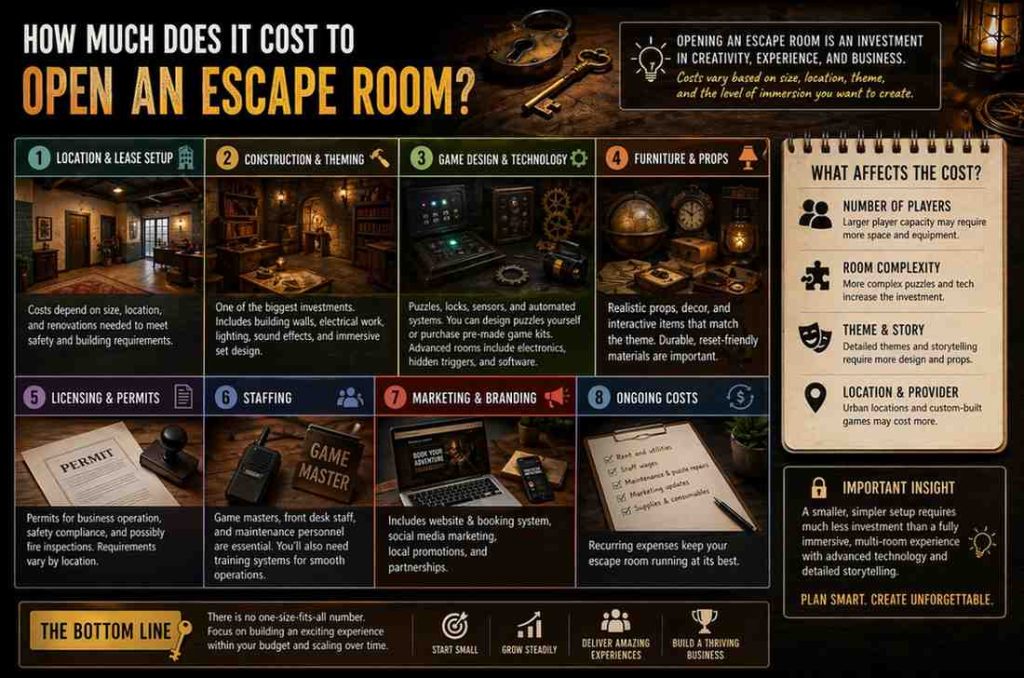
Escape Room Business: Cost Breakdown
Starting an escape room business can be exciting and rewarding. However, you must understand every expense before you begin. Knowing how much does it cost to build an escape room helps you plan better and avoid surprises later.
This section breaks down each major expense in simple terms. It focuses on upfront costs that shape your success from day one.
Upfront Costs You Should Expect
Upfront costs form the base of your escape room business. These expenses usually require the largest budget early on.
Rent and Renovations
Your location plays a big role in your overall budget. The rent and renovation costs can change based on where you operate, how large the space is, and how much work the building needs.
Location matters
A busy city area brings higher rent. Downtown spaces in large cities can cost $10,000 to $20,000 per month. Smaller cities or quieter areas may cost $5,000 to $8,000 per month.
High foot traffic can help bring more customers. In some cases, higher rent is worth the exposure.
Property size
Larger spaces cost more to rent. A small one room location may start around $2,000 to $3,000 per month. Bigger spaces can exceed $10,000 monthly.
Renovation work
Renovations often cost more than expected. Most escape rooms require custom changes.
Common renovation expenses include:
- Room layout and wall builds
- Electrical work
- Paint and finishing
- Safety updates
Design work alone can cost $5,000 to $15,000. Skilled labor may add $10,000 to $30,000, depending on complexity.
The goal is balance. A smaller space in a smart location can perform better than a large space with high overhead.
Theme and Design Costs
Your theme creates the player experience. A strong theme does not always mean high spending.
Set design
Building themed walls, floors, and decor requires materials and time. Costs often range from $5,000 to $20,000.
Props
Props can be simple or detailed.
Options include:
- Thrift or recycled items under $500
- Custom props that cost over $1,000 each
Custom props improve immersion but raise costs.
Puzzles
Puzzles drive engagement. Basic puzzles cost less. Advanced puzzles cost more. Expect puzzle costs between $2,000 and $10,000 based on design and originality.
Technology Costs
Technology supports the game flow and player safety. Common needs include:
- Lighting controls
- Sound effects
- Camera systems
- Simple automation
Basic systems may cost under $1,000. More advanced systems can reach $5,000 or higher. Creative design often matters more than expensive tech.
Permits, Licenses, and Insurance
Legal setup is required before opening. Typical costs include:
- Business license: $50 to $200 yearly
- Zoning permits: $100 to $500
- Fire safety permits: $100 to $300
- Building permits: $1,000 or more if renovations are large
- Insurance for liability protection
Local rules differ. Early research saves money and stress.
Marketing and Branding Costs
Marketing helps customers find you and trust your brand.
Common expenses include:
- Website setup: $500 to $2,000
- Logo and design work: $500 to $1,000
- Online ads and promotions
- Local print and partnership efforts
Many owners work with a social media marketing agency to build awareness faster. A reasonable starting budget ranges from $5,000 to $15,000.
Software and Equipment
Daily operations need reliable tools. Typical costs include:
- Computers: $500 to $1,000 each
- Printers and supplies: $100 to $500
- Booking software with monthly fees
Plan $1,500 to $3,000 for initial systems.
Other Essential Costs
Small details still matter. Additional expenses include:
- Lobby furniture and seating
- Staff room basics
- Security cameras and alarms
- Staff wages and training
Understanding every part of how much does it cost to build an escape room helps you plan with confidence. Clear budgeting leads to better decisions and stronger long term results.
Recurring Costs
After opening your escape room, monthly expenses continue. These costs change over time and affect long term profit. Planning ahead helps control how much does it cost to build an escape room beyond launch.
This section explains recurring costs in clear and simple terms.
Rent and Lease Increases
Rent does not stay the same forever. Most leases increase over time.
- Expect yearly rent increases of 3 to 5 percent
- Busy areas may rise faster
- Long leases with fixed increases offer better stability
If your location depends on tourism, seasonal pricing may help. Flexible rent during slow months protects cash flow.
Utilities and Monthly Bills
Your escape room needs power and water every day.
Typical utility costs include:
- Electricity for lights and puzzles
- Water for restrooms and cleaning
- Internet and phone services
For small to medium locations, expect $500 to $1,000 per month. Larger rooms or heavy tech use can raise this amount.
Energy saving lights and smart thermostats lower bills over time.
Maintenance and Repairs
Wear and tear happens fast with daily players.
Plan monthly costs for:
- Small fixes and replacements
- Broken props or locks
- Cleaning and touch ups
Average maintenance costs range from $200 to $500 per month.
Unexpected problems happen. Set aside $1,000 to $2,000 monthly as a safety buffer.
You may also refresh themes to keep players coming back.
Ongoing Marketing and Promotions
Marketing never stops for an escape room business.
Common recurring costs include:
- Website updates and hosting
- Social media content and ads
- Online listings and reviews
Monthly online marketing often costs $500 to $1,000.
Extra promotions may include:
- Local events
- Corporate packages
- Seasonal campaigns
These efforts may cost $500 to $3,000, depending on scale.
Staffing and Payroll
Your staff shapes the player experience.
Monthly staff costs include:
- Hourly wages
- Benefits and incentives
- Ongoing training
Wages usually range from $15 to $25 per hour. Skilled staff may cost more.
Medium sized locations often spend $8,000 to $15,000 monthly on payroll.
Training keeps games safe and fun. It also reduces mistakes.
Software Subscriptions
Many tools charge monthly fees.
Common subscriptions include:
- Booking systems
- Email and social tools
- Design platforms
- Accounting software
- Security monitoring
Most subscriptions cost $10 to $50 each per month.
Track subscriptions often. Cancel tools you no longer use.
Music and Licensing Fees
If you play music, licensing is required. Fees vary by usage and provider. Budget monthly to avoid fines.
Navigating Cost Variations and Considerations
How much does it cost to build an escape room can change based on many real world factors. Earlier estimates only give a starting point. Your final numbers depend on choices you make during planning.
This section explains the key factors that cause cost differences. Each factor affects your budget in a clear and practical way.
Location and Market Type
Location strongly affects spending. A busy city offers more foot traffic and visibility. However, rent, permits, and labor often cost more in urban areas.
Rural locations usually offer lower rent and fewer regulations. These savings can help lower early expenses. Still, rural businesses often need more marketing to attract steady players.
Choosing the right location means balancing visibility with long term affordability.
Number of Escape Rooms You Open
Starting with one room helps control costs. It allows you to focus on quality and customer feedback. Initial spending stays lower, but repeat visits may be limited.
Multiple rooms increase earning potential. Groups return more often, and larger bookings become possible. At the same time, more rooms raise costs for space, props, and staffing.
Each added room increases planning needs and long term commitments.
Theme and Game Complexity
Complex themes raise costs quickly. Custom sets, moving parts, and advanced systems require more time and money.
Simple themes can still deliver strong experiences. Clear stories and smart puzzle flow often matter more than flashy effects. Careful planning helps control expenses while keeping games engaging.
Reviewing your escape room equipment list early helps avoid overspending on unnecessary items.
DIY Versus Professional Help
DIY work saves money on labor. It also gives you full control over design choices. However, it takes time and requires skill.
Professional services offer polish and efficiency. Designers and builders reduce mistakes and speed up timelines. Their expertise increases quality but raises costs.
The best approach balances savings with reliability. Smart choices here protect both budget and player experience.
Actionable Tips and Strategies for Minimizing Costs
Many owners ask how much does it cost to build an escape room before they start spending. Smart planning helps lower risk and protect your budget.
Use the strategies below to reduce costs while keeping quality high.
Negotiate Before You Commit
Never accept the first price you receive. Talk with landlords and compare similar spaces nearby. Show interest in long term leasing to gain better terms. Ask for slower rent increases or free setup months.
Apply the same approach to permits, insurance, and equipment rentals. A clear escape room business plan helps sellers trust your vision and offer better pricing.
Source Props and Materials Creatively
You do not need new items for everything. Look for props in thrift shops, resale sites, and local marketplaces. Many unique pieces cost very little and add realism. Local artists and builders may trade services or offer lower prices. These partnerships save money and build community ties.
Use DIY Methods Where It Makes Sense
In house work lowers labor costs. Let your team design puzzles and basic mechanics. Reuse materials when possible. Repurposed items save money and reduce waste. Focus DIY work on areas that do not affect safety.
Use Low Cost Marketing Channels
Marketing does not need a large budget.
Try these options:
- Social media posts and short videos
- Player photos and behind the scenes content
- Review requests after each game
Paid ads can still help when used carefully. Small test campaigns on Facebook Ads often bring strong results with low spending.
Improve Booking and Daily Operations
Automation saves time and money. Online booking tools reduce manual work and errors. Automated reminders cut no shows and lost revenue. Smooth systems help rooms stay full without extra labor.
Focus on a Clear Niche Audience
Serving everyone costs more. Choose a clear theme or audience and build around it. Focused rooms need fewer changes and attract loyal players. Strong niches also grow faster through word of mouth.
How Much Does It Cost to Build an Escape Room?
How much does it cost to build an escape room depends on your goals, space, and planning choices. Contact us to get clear cost guidance, realistic budgeting, and step by step support before you invest. We help you plan smarter, avoid costly mistakes, and move forward with confidence.
FAQs
How much does it cost to build an escape room?
Costs vary based on location, size, and design. Most owners spend between $20,000 and $50,000 for a modern room.
Can I lower costs by building the room myself?
Yes, DIY work can reduce labor costs. However, it requires time, skill, and careful planning to avoid mistakes.
What part of the build costs the most?
Rent and renovations usually cost the most. Design and labor also add a large share to the budget.
Do escape rooms have ongoing monthly costs?
Yes, monthly costs include rent, utilities, staff wages, and marketing. Planning ahead helps manage these expenses.
Is it possible to start with just one escape room?
Yes, many owners begin with one room. This approach lowers risk and helps test demand before expanding.
Related Posts

Influencer Marketing Guide To Boost Your Earnings

Email Marketing Guide to Make More Money
Escape Room Design Guide To Maximize Engagement & Profits
Improve Conversion Rates with Our PPC guide
Operations Guide To Streamline & Scale Your Business

Google Ads Guide to improve your performance

Facebook Ads Guide to Level up Your Performance
The Conversion Rate Optimization (CRO) Guide That’ll Make You More Money

Show Up In Search Results With This Always-Updated SEO Guide
Build And Improve Your Landing Pages With This Always Updated Chapter Guide
Trampoline Park
Trampoline Park Investment Guide to Grow Revenue And Profits