

Home » Escape Room Ideas That Increase Player Engagement
Escape Room Ideas That Increase Player Engagement
Great escape room ideas help create fun, clear, and memorable experiences that keep players engaged from start to finish. Strong concepts improve storytelling, puzzle flow, and teamwork, which leads to better reviews and repeat visits. With the right planning and guidance, room owners can turn simple concepts into standout attractions. Blue Apple Launchpad, LLC supports escape room businesses by helping refine ideas, improve design choices, and build experiences that players enjoy and remember.
Why Strong Escape Room Ideas Matter for Player Experience
Strong escape room ideas help players enjoy the game more and feel excited from the start. Clear ideas make the experience fun, simple, and easy to follow.
- Better Player Engagement: Players stay focused when clues make sense and the story feels real. Well planned escape room puzzle ideas keep everyone involved and working together.
- More Repeat Visits: Players return when the game feels fun, fair, and rewarding. Creative escape room theme ideas make each visit feel fresh and worth repeating.
- Stronger Word of Mouth Growth: Happy players talk about their experience with friends and family. Positive stories spread faster when the game feels exciting and easy to enjoy.
Popular Escape Room Ideas Based on Themes
Popular escape room ideas help players understand the story fast and enjoy the game more. Clear themes make the experience fun, exciting, and easy to follow.
Spooky and Mystery Themes
Spooky games focus on secrets, clues, and hidden stories. Players feel curious and alert while solving puzzles together. As a result, these escape room ideas work well for groups who enjoy suspense. They also fit many escape room party ideas for teens and adults.
Adventure and Fantasy Themes
Adventure themes feel playful and welcoming for all ages. Players may hunt for treasure or explore magical worlds. Because the story feels clear, these escape room ideas keep groups engaged. Smart escape room design ideas help turn simple rooms into fun adventures.
Sci-Fi and Technology Themes
Sci-fi themes use space, time travel, or future missions to spark interest. Players enjoy solving modern and creative challenges. These escape room ideas also support strong escape room marketing and advertising ideas because they look exciting in photos and videos. Many owners work with escape room experts to build immersive sci-fi games that players remember.
Creative Escape Room Ideas for Puzzle Design
Creative escape room ideas help players enjoy puzzles without feeling confused. Simple challenges make the game fair and fun for everyone.
Code and Cipher Puzzles
Code puzzles use numbers, letters, or symbols to unlock clues. Players feel excited when each answer leads to progress. Clear escape room design ideas help make these puzzles easy to follow.
Logic and Sequencing Challenges
Logic puzzles ask players to put clues in the right order. Everyone can help, which builds teamwork. These escape room ideas also support escape room marketing and advertising ideas by showing fair gameplay.
Physical and Sensory Puzzles
Physical puzzles use movement, touch, or sound to keep players active. These escape room ideas add energy and fun to the room. Simple planning works best when using essential escape room equipment to build clear and safe challenges.
Escape Room Ideas for Parties and Group Events
Group events feel more fun when games are easy to understand and exciting to play. Clear planning helps everyone enjoy the experience together.
Birthday and Family Events
Many families enjoy group games during birthdays and special days. These events work well in family entertainment centers where kids and adults play together. Simple escape room puzzle ideas keep everyone involved and smiling.
- Easy to Follow Games: Puzzles stay clear so kids and adults can help solve clues.
- Fun Group Themes: Bright escape room theme ideas make the game feel playful and exciting.
Corporate and Team Building Events
Work groups enjoy activities that build trust and teamwork. Simple challenges help teams talk, think, and solve problems together.
- Team Focused Tasks: Players work together to reach a shared goal.
- Clear Game Flow: Easy rules help teams stay focused and relaxed.
Room Design Choices That Make Games Better
Good room design helps players feel comfortable, focused, and excited. Clear layouts make games easier to enjoy and understand.
Rooms should guide players without causing stress or confusion. Smart design choices also help owners start a profitable escape room by creating spaces that feel fun and safe. These improvements support escape room marketing and advertising ideas because well designed rooms look better in photos and videos.
Clear Layout and Flow
Players move with ease when paths and clues feel natural. As the game continues, good flow keeps everyone engaged.
Lighting and Sound Control
Soft lights and clear sounds help players stay focused. Subtle effects add excitement without causing distractions.
Marketing Ideas That Help Increase Bookings
Good marketing helps people see why a game is fun and worth booking. Clear visuals and simple messages make decisions easier for families and groups. Many owners work with an escape room marketing agency to share their games with the right audience.
- Strong Visual Appeal: Photos and videos show the mood of the game clearly. Clean rooms and smart escape room design ideas help games look exciting online.
- Clear Messaging: Short and simple words explain what players will experience. As a result, guests understand the game faster.
- Easy Booking Offers: Simple deals and clear calls to action help guests book without stress. Clear choices build trust and confidence.
Common Mistakes to Avoid When Planning Escape Room Ideas
Planning problems can make games feel confusing or unfair. Simple choices help players enjoy the experience more.
Making Puzzles Too Hard
Some puzzles feel tricky without being fun. As a result, players may feel stuck or frustrated. Clear clues help everyone stay involved.
Weak Story Flow
A game feels less exciting when the story feels broken. Players enjoy games more when each clue connects clearly.
Poor Room Layout
Crowded spaces make it hard to move and think. Clean layouts help players focus and work together.
Rushing the Planning Process
Fast planning often leads to missed details. Careful preparation helps avoid problems and keeps games smooth. Using a clear escape room business plan helps guide decisions and prevents costly mistakes.
Expert Support for Planning and Growth
Clear guidance helps owners turn escape room ideas into games players enjoy. Simple steps make planning easier and results more consistent.
Strategy Support
Strong direction helps owners understand what to build and why. As plans move forward, clear goals guide better decisions.
Planning Guidance
Step by step help reduces confusion and saves time. Careful planning also supports better escape room design ideas that feel fun and easy to play.
Industry Experience
Hands-on knowledge helps owners avoid common mistakes. Real lessons from past projects lead to smoother games and happier players.
Ready to Build Better Escape Room Experiences?
Get clear guidance to plan games that players enjoy and remember. Simple support helps avoid mistakes and saves time. Book a call today to get expert help and move your escape room forward with confidence.
FAQs
What makes an escape room fun for players?
A clear story, fair puzzles, and good teamwork make the experience enjoyable for everyone.
How hard should puzzles be for most groups?
Puzzles should feel challenging but not confusing, so players stay excited and confident.
Do escape rooms work well for group events?
Yes, they are great for families, friends, and work teams because everyone plays together.
How often should escape room games be updated?
Rooms should be refreshed when players ask for new experiences or booking rates slow down.
Why is planning important before building a room?
Planning helps avoid costly mistakes and creates a smoother game for players.
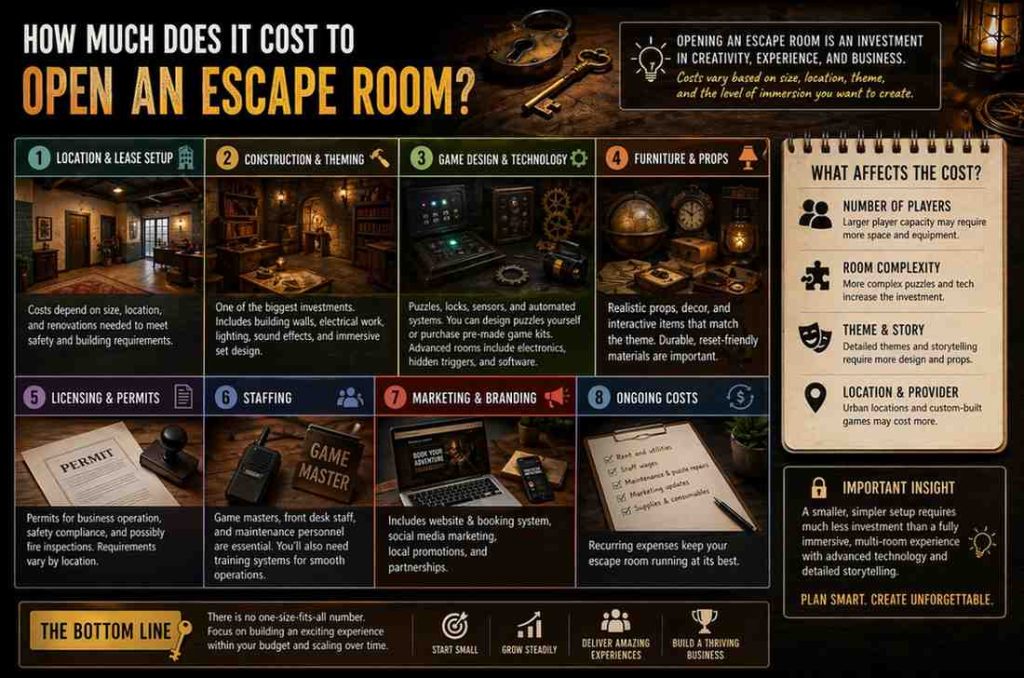
Together, these costs often place the average escape room between $100,000 and $200,000.
Major Costs to Expect When Opening an Escape Room
Opening an escape room involves several main expenses. Each cost plays a role in how the business runs. When these costs are explained simply, planning becomes much easier.
Construction and Room Design Costs
Construction and room design cover how the space looks and feels. This includes walls, paint, flooring, and themed décor. Most rooms cost between $3,000 and $20,000 or more. Simple designs cost less, while detailed themes raise the budget.
Puzzles and Props
Puzzles and props make the game fun and challenging. These include locks, clues, furniture, and themed items. Costs usually range from $5,000 to $15,000 per room. Choosing durable pieces matters, since guests use them often. A clear escape room equipment list helps owners plan what they truly need.
Technology and Control Systems
Technology controls lighting, sound, and game timing. Basic systems often cost between $2,000 and $5,000 or more. Simple setups work well for many rooms. Too much tech can raise costs without adding value.
Rent and Location Setup
Rent and location setup costs change by city and space size. Busy areas cost more but bring more foot traffic. Setup may include deposits, utilities, and basic improvements. This expense varies the most.
Licenses, Permits, and Insurance
Licenses, permits, and insurance are required to operate legally. These costs usually range from $1,000 to $3,000. They protect both the business and the guests. Skipping these steps can cause problems later.
Marketing and Website Costs
Marketing and website costs help people find the escape room. This includes a website, local listings, and simple ads. Most owners spend $1,000 to $4,000 at launch. For steady growth, many rely on professional escape room marketing support to reach the right audience.
Ways to Lower the Cost to Open an Escape Room
When planning how much does it cost to open an escape room, finding ways to save money matters. Smart choices early can lower startup costs. Simple strategies help new owners stay within budget without hurting the guest experience.
Building Rooms in Phases
Building rooms in phases spreads out expenses. Owners often open with one room first. After income starts coming in, more rooms are added. This approach lowers risk and keeps spending under control.
Choosing Modular or Pre-Built Concepts
Modular or pre-built concepts help reduce upfront costs. These designs come ready to install and test. Setup takes less time, which saves money. This option works well when asking how much does it cost to open an escape room with limited funds.
Doing Some Work Yourself
Doing some work yourself can cut costs further. Painting and simple décor are common examples. Skilled tasks should stay with professionals. This balance helps manage how much does it cost to open an escape room safely.
Why a Solid Business Plan Matters Before You Start?
Before spending money, clear planning helps avoid mistakes. A strong plan shows where funds go and why each cost matters. Many owners rely on an escape room business plan to stay organized and control spending early. This approach supports smarter decisions and lowers risk.
A solid business plan supports:
- Budget control: Clear numbers show startup costs and monthly expenses.
- Smarter spending: Owners focus on needs first and delay extras.
- Room planning: The plan outlines how many rooms to open at launch.
- Location choices: Rent and space size are weighed against income goals.
Future growth: Goals are set for adding rooms and upgrading themes.
Start Your Escape Room the Smart Way
Ready to take the next step with confidence. Get clear answers about costs, planning, and setup. Book a consultation to receive expert guidance and start building your escape room with a solid plan.
FAQs
How much does it cost to open an escape room on average?
Most escape rooms cost between $100,000 and $200,000 to open. However, smaller setups can cost less, while larger builds cost more.
Can I open an escape room with only one room?
Yes, many owners start with one room. This lowers risk and helps test demand before expanding.
What is the biggest startup cost for an escape room?
Room construction and design usually cost the most. Themes, décor, and build quality affect the final price.
Is it cheaper to build an escape room myself?
DIY builds can save money at first. However, mistakes can raise costs later if work needs fixing.
How long does it take to recover startup costs?
Most owners see returns within one to three years. Still, marketing and location play a big role.
Related Posts

Influencer Marketing Guide To Boost Your Earnings

Email Marketing Guide to Make More Money
Escape Room Design Guide To Maximize Engagement & Profits

Improve Conversion Rates with Our PPC guide

Google Ads Guide to improve your performance

Facebook Ads Guide to Level up Your Performance

Show Up In Search Results With This Always-Updated SEO Guide
Build And Improve Your Landing Pages With This Always Updated Chapter Guide
Trampoline Park
Trampoline Park Investment Guide to Grow Revenue And Profits